
IC Production Test Adapters
Fixture-based adapters engineered for repeatable, high-cycle manufacturing and validation testing.
What Is an IC Production Test Adapter?
IC production test adapters are interface assemblies used during manufacturing, validation,
and production screening of integrated circuits. They provide the physical and electrical
interface between a packaged device and the test system performing functional, parametric,
or reliability testing.
In production environments, these adapters allow devices to be tested within the constraints
of an established test setup. This may involve adapting a device to an existing production
board footprint, load board, emulator pod, or fixture interface without requiring changes
to the underlying test hardware.
Depending on the application, a production test adapter may present a socketed top interface
to accept the device under test, or it may provide a package-to-package translation that mates
directly with an existing interface such as a DIP plug, PLCC socket, or other legacy or
standardized footprint. These adapters help maintain continuity between development,
validation, and production test flows when device packaging differs from the production
test interface.
The primary role of a production test adapter is not development convenience, but reliable
electrical and mechanical interfacing that enables accurate testing within real-world
manufacturing constraints.
Examples of Adapters Used in Production Testing
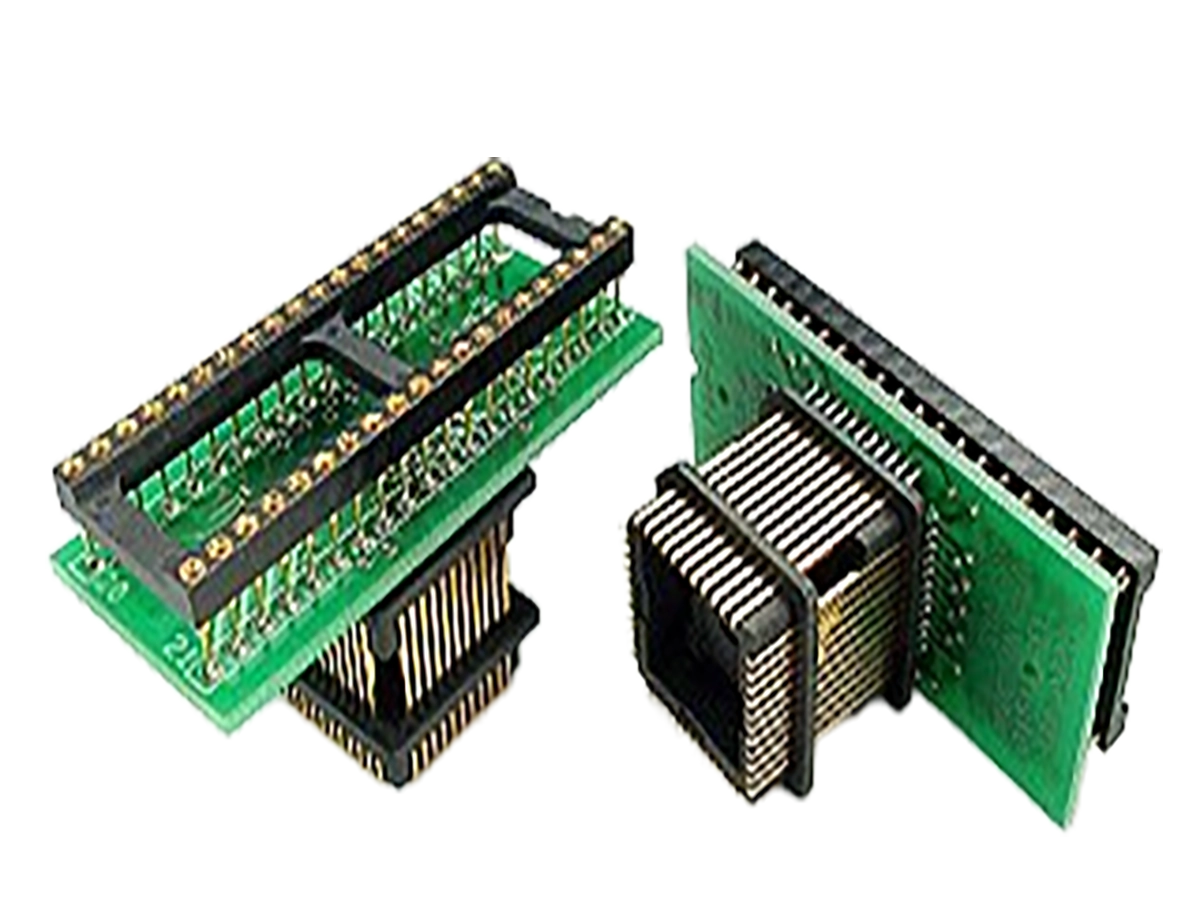
Top: DIP interface
Bottom: PLCC production plug
Used to test PLCC devices in production fixtures designed around a DIP interface.
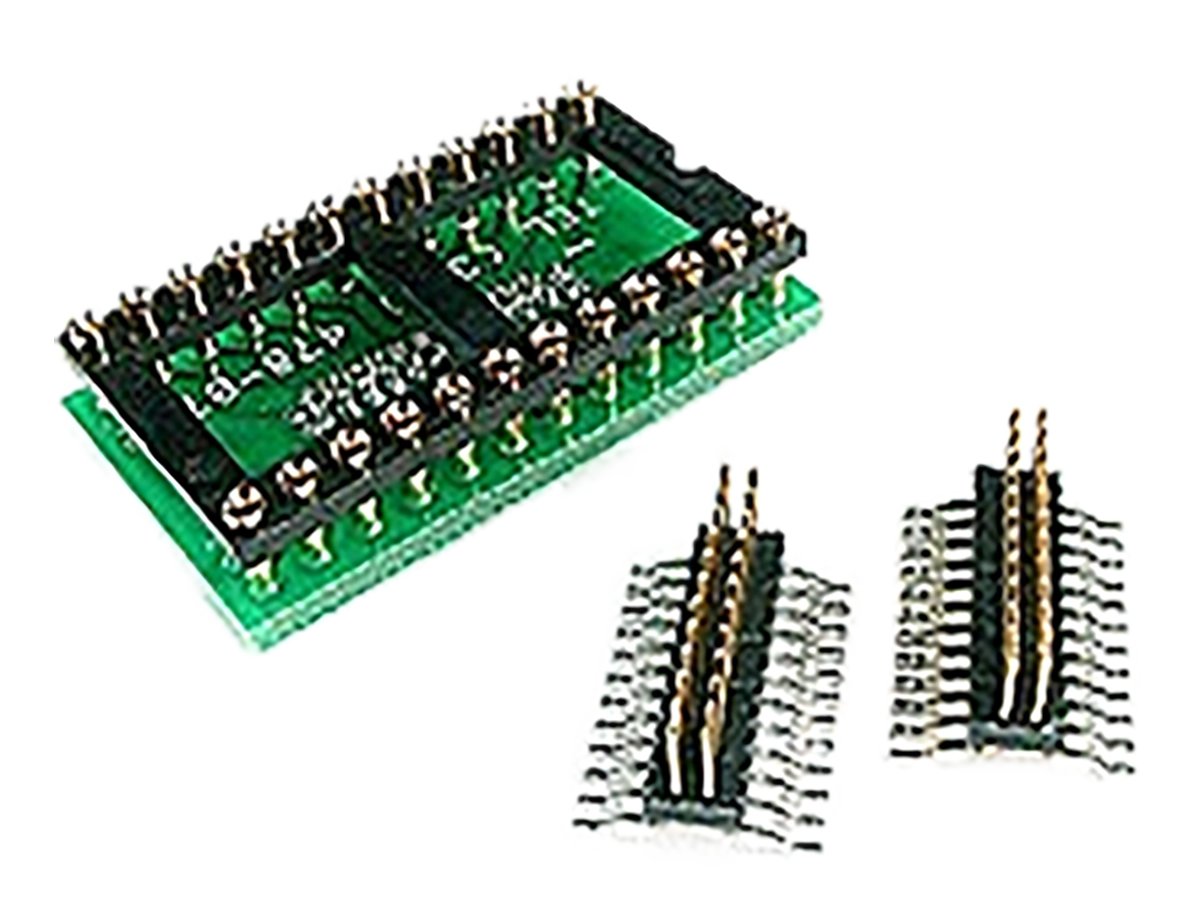
Top: DIP interface
Bottom: SOIC footprint
Used to test SOIC devices in production fixtures designed around a DIP interface.
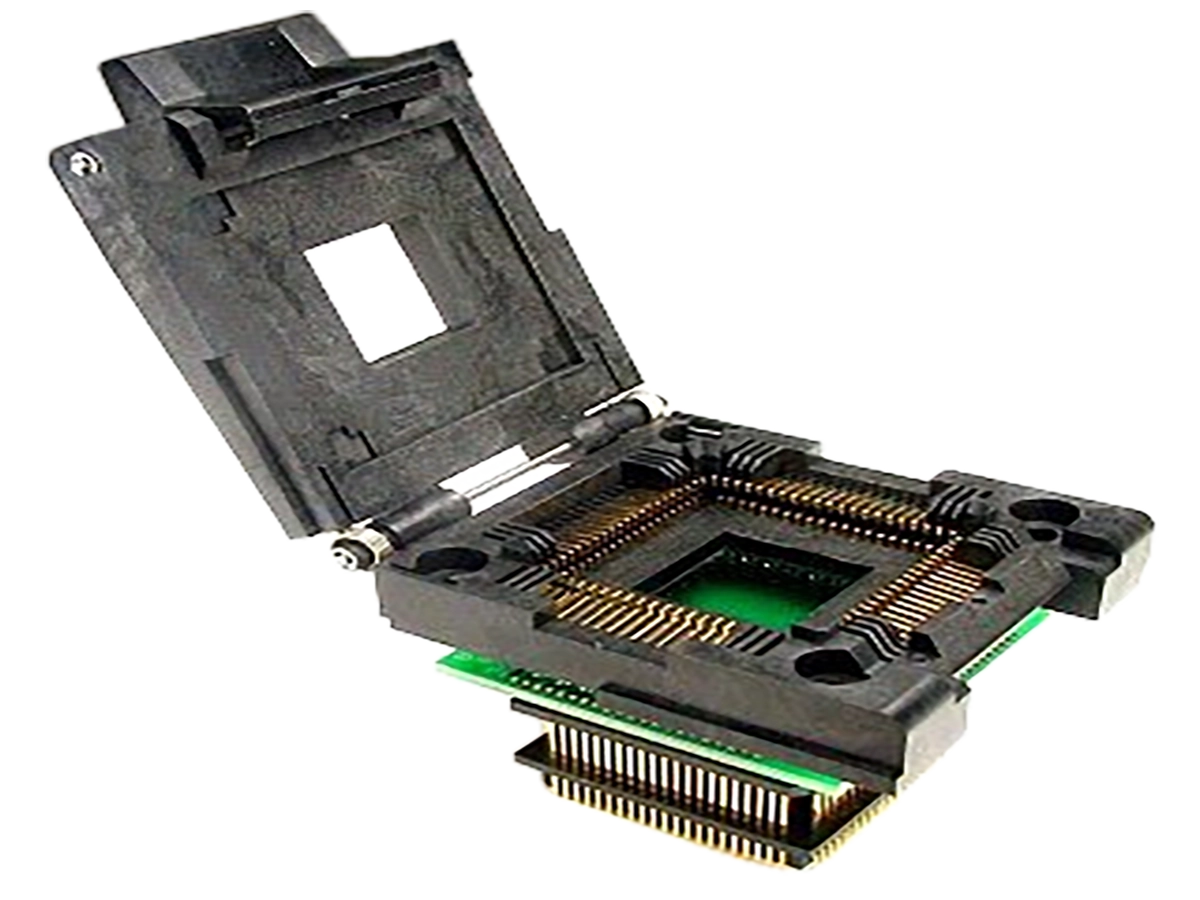
Top: PLCC interface
Bottom: PLCC production plug
Used to test PLCC devices in production fixtures requiring same-package interfacing.
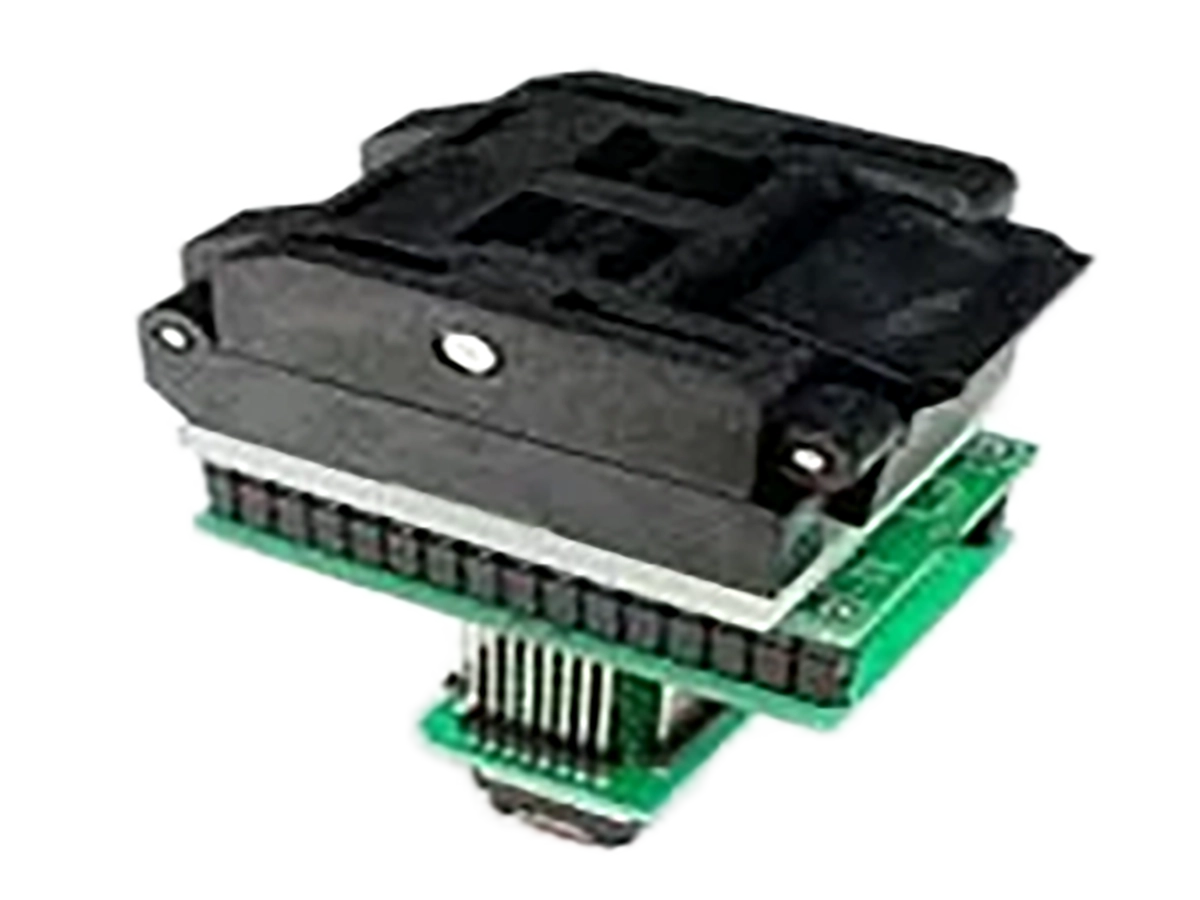
Top: QFP interface
Bottom: QFP footprint
Used to test QFP devices in production fixtures requiring same-package interfacing.
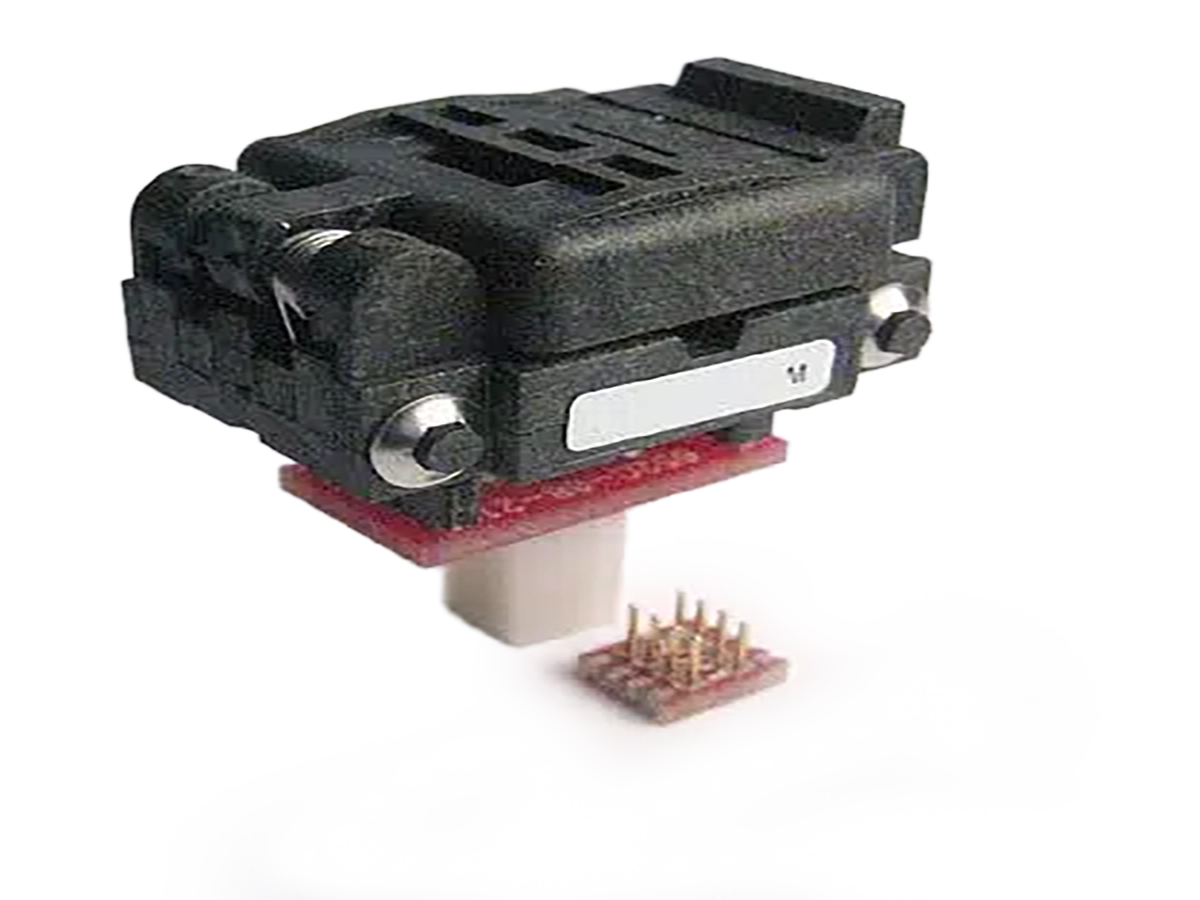
Top: QFN interface
Bottom: QFN footprint
Used to test QFN devices in production fixtures designed for leadless packages.
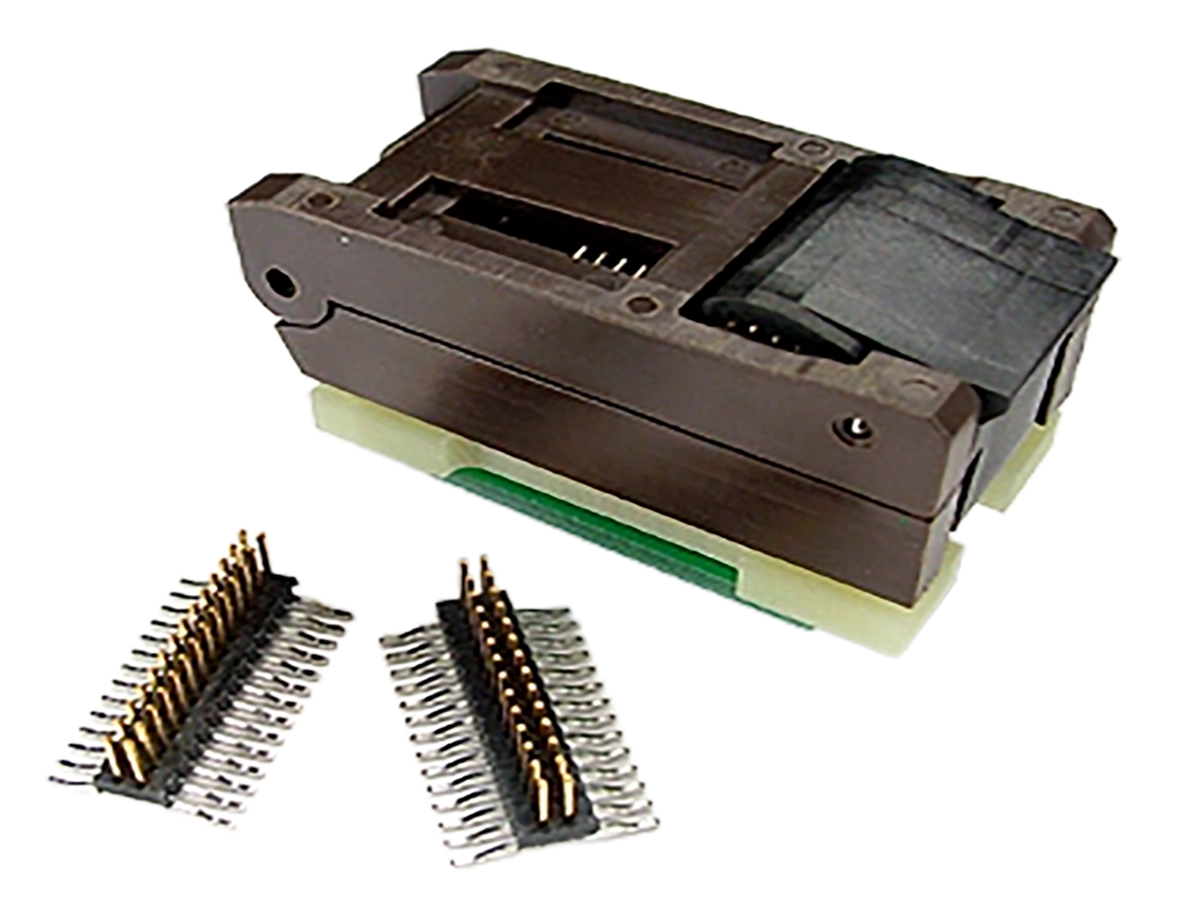
Top: SOIC interface
Bottom: SOIC footprint
Used to test SOIC devices in production fixtures requiring same-package interfacing.
Design Priorities for Production Testing
Production test adapters are engineered with manufacturing constraints in mind.
Typical design priorities focus on mechanical robustness, alignment accuracy,
and repeatable electrical performance within production environments.
- Mechanical stability for fixture-based use
- Precise alignment features to ensure consistent device seating
- Robust contact systems suitable for high insertion counts
- Controlled tolerances to minimize measurement variation
- Compatibility with manual, semi-automated, and automated test fixtures
These considerations help ensure reliable electrical performance throughout
production workflows while maintaining compatibility with existing test infrastructure.
Custom Production Test Adapters
When standard interfaces do not meet fixture, device, or pinout requirements,
custom production test adapters can be designed to match specific manufacturing
constraints and test environments.
Custom solutions may support:
- Unique pin mappings or signal reassignments
- Package size or form-factor variations
- Fixture-specific mechanical envelopes and clearances
- Specialized contact, retention, or alignment requirements