
SMT Quad, PLCC, QFN & QFP to DIP Adapters
SMT quad package to DIP adapters convert PLCC, QFN, and QFP surface-mount footprints to 0.100″ DIP plugs for replacement, development, and prototype applications.
Overview
SMT quad package to DIP replacement adapters provide an electrical interface between surface-mount quad package footprints and a DIP plug used in through-hole sockets or breadboard environments.
The top interface consists of SMT pads designed to match PLCC, QFN, or QFP package footprints. The bottom interface presents a standard 0.100″ (2.54 mm) DIP plug that allows the adapter to be inserted into DIP sockets or prototype boards.
These adapters are commonly used when replacing surface-mount quad package devices with socketed DIP-compatible assemblies during development, repair, or prototype testing.
Top Interface: PLCC, QFN, or QFP surface-mount pads
Bottom Interface: 0.100″ DIP plug
Routing: 1:1 pin mapping between package leads and DIP pins
Mechanical dimensions and electrical routing details are defined at the individual product level.
PLCC, QFN, and QFP interface geometry follows standard surface-mount pad spacing, lead pitch, and body size for the specified package configuration.
DIP plug geometry follows standard 0.100″ (2.54 mm) pitch spacing compatible with DIP sockets and breadboard-style prototyping systems.
Substrate material is rigid FR-4 with plated-through vias. Pad geometry and copper weight are controlled to maintain dimensional stability and signal integrity.
Overall height, insertion depth, and body dimensions vary by part number and are specified at the product level.
These adapters are part of the Production Replacement Adapters product family.
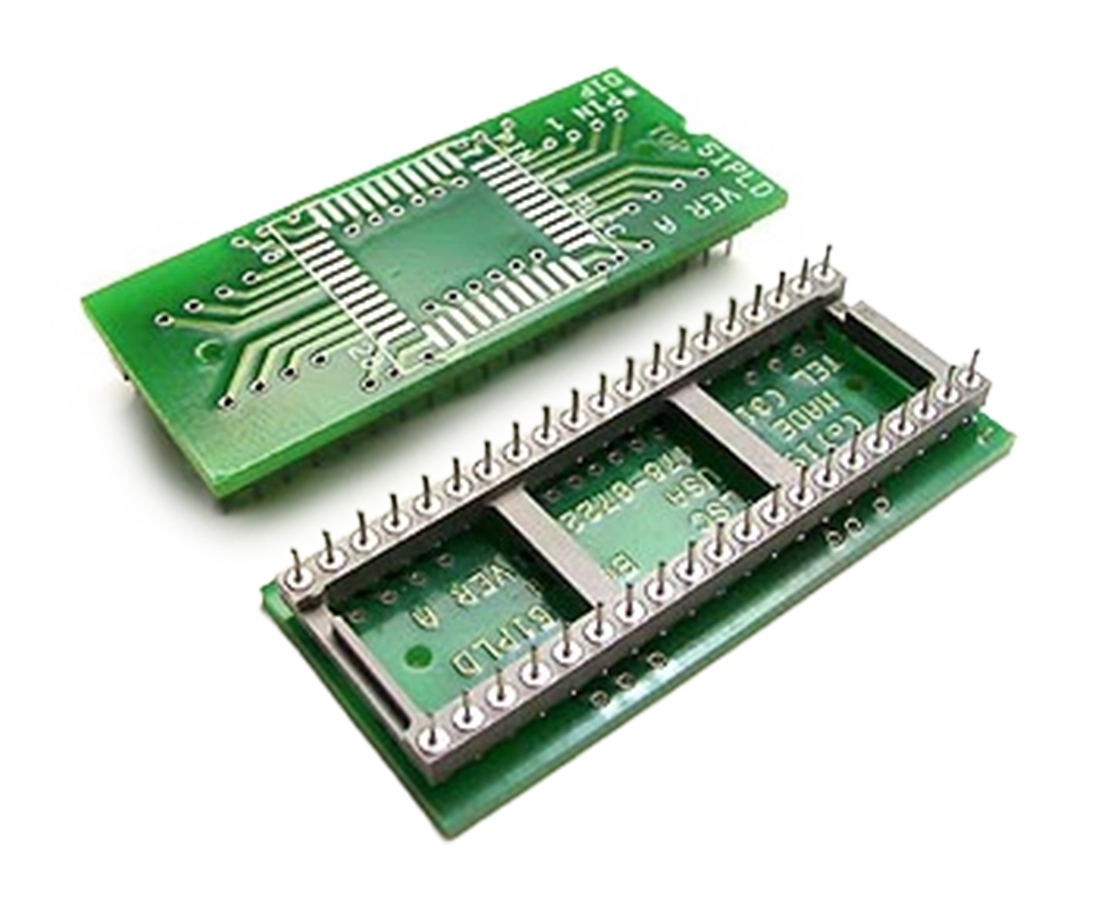
SMT to Through-Hole Adapter for PLCC to DIP (8051 Family Only)
| Land Pattern Pins | Mapping | 600 mil Span DIP Plug |
|---|---|---|
| 44 (LP) | 8051 mapping | PA-PLL51-44 |
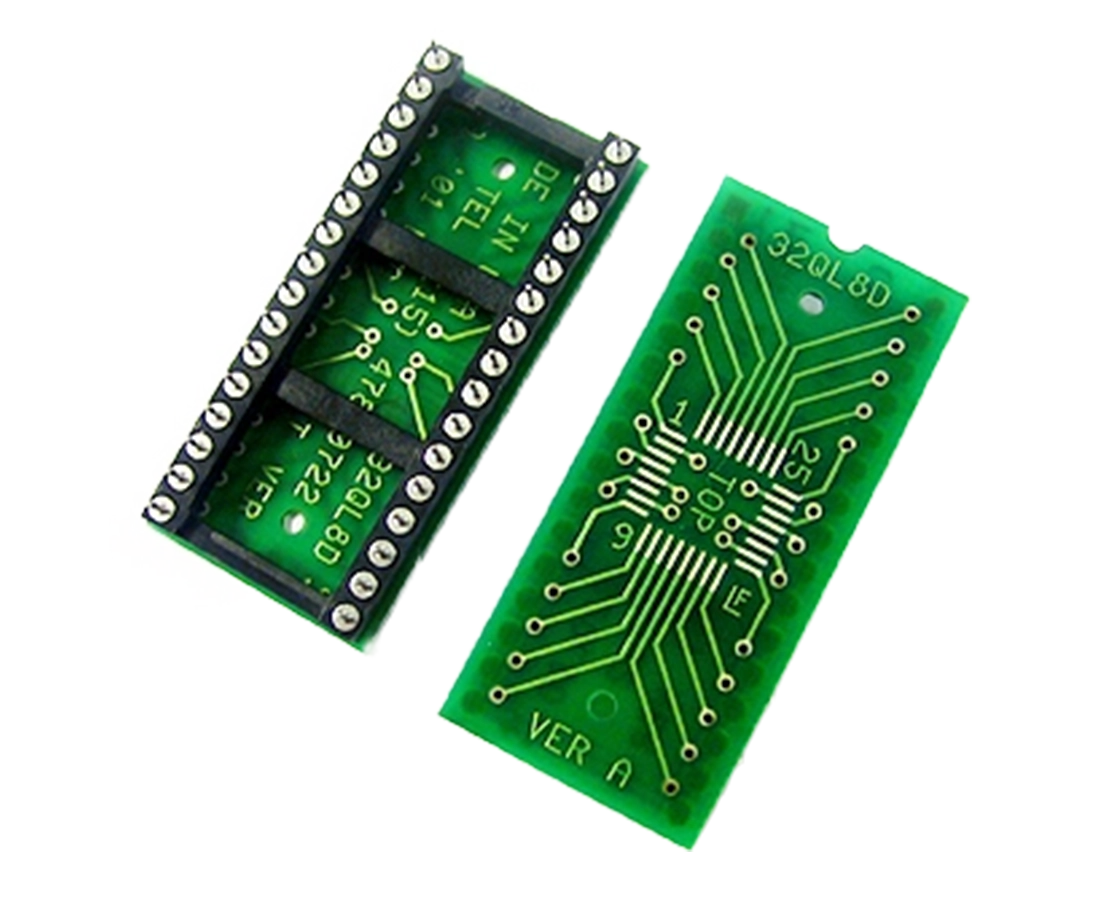
SMT to Through-Hole Adapter for QFN to DIP
| Pins | Wiring | 600 mil Span DIP Plug |
|---|---|---|
| 32 | 1:1 by signal | PA-QLD6SM18-32F-88 |
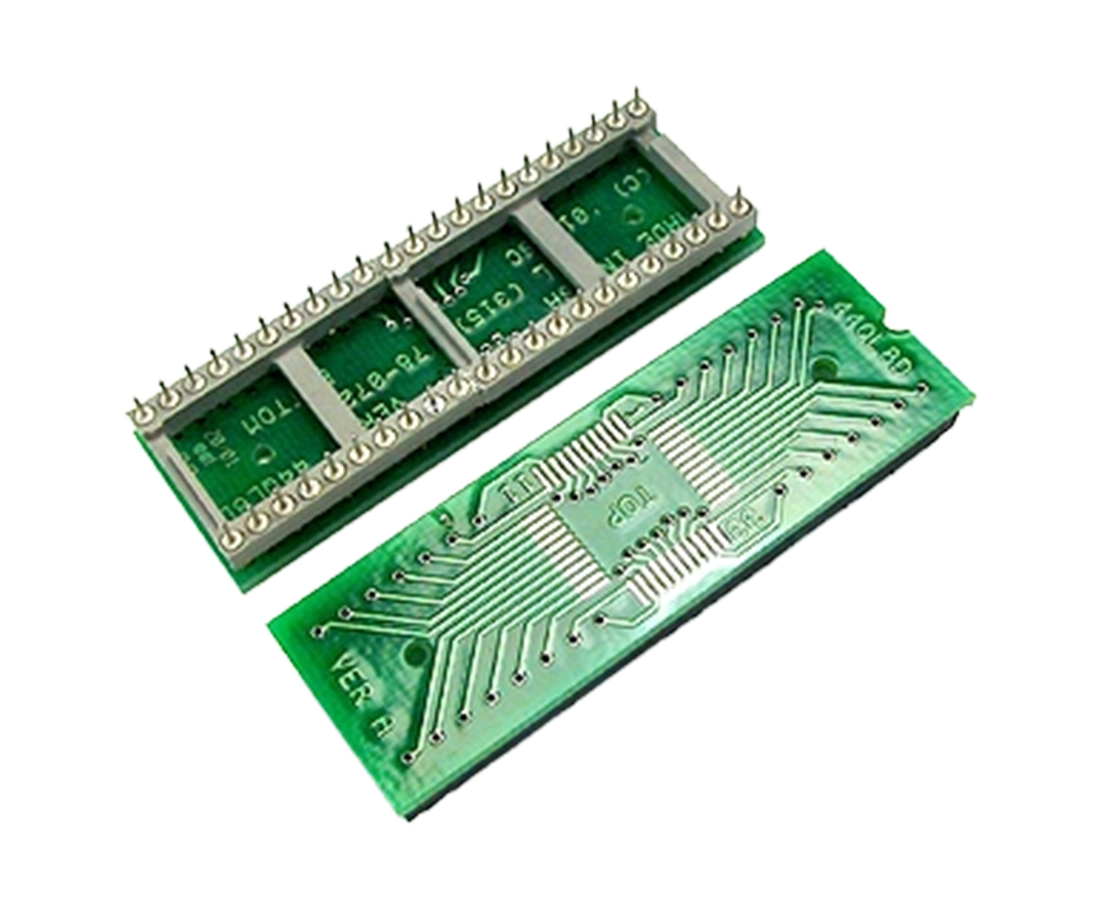
SMT to Through-Hole Adapters for QFP to DIP
| Pins | Wiring | 600 mil Span DIP Plug |
|---|---|---|
| 44 | 1:1 by signal | PA44QL8-D |
| 44 | 1:1 by pin | PA44QL8-1D |
Not Finding What You Need?
Some quad package replacement applications require specific pin counts, body sizes, or custom routing configurations. If the adapter required for your device is not listed, Adapt-Plus can assist with custom adapter solutions.
Custom adapters are available for development, repair, and specialized prototype requirements.